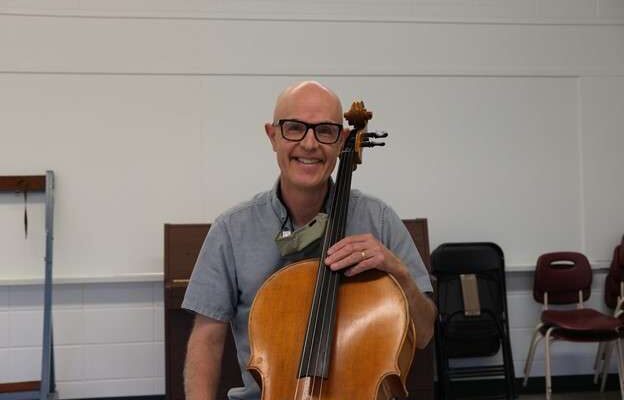
Interview with Mark Eeles:
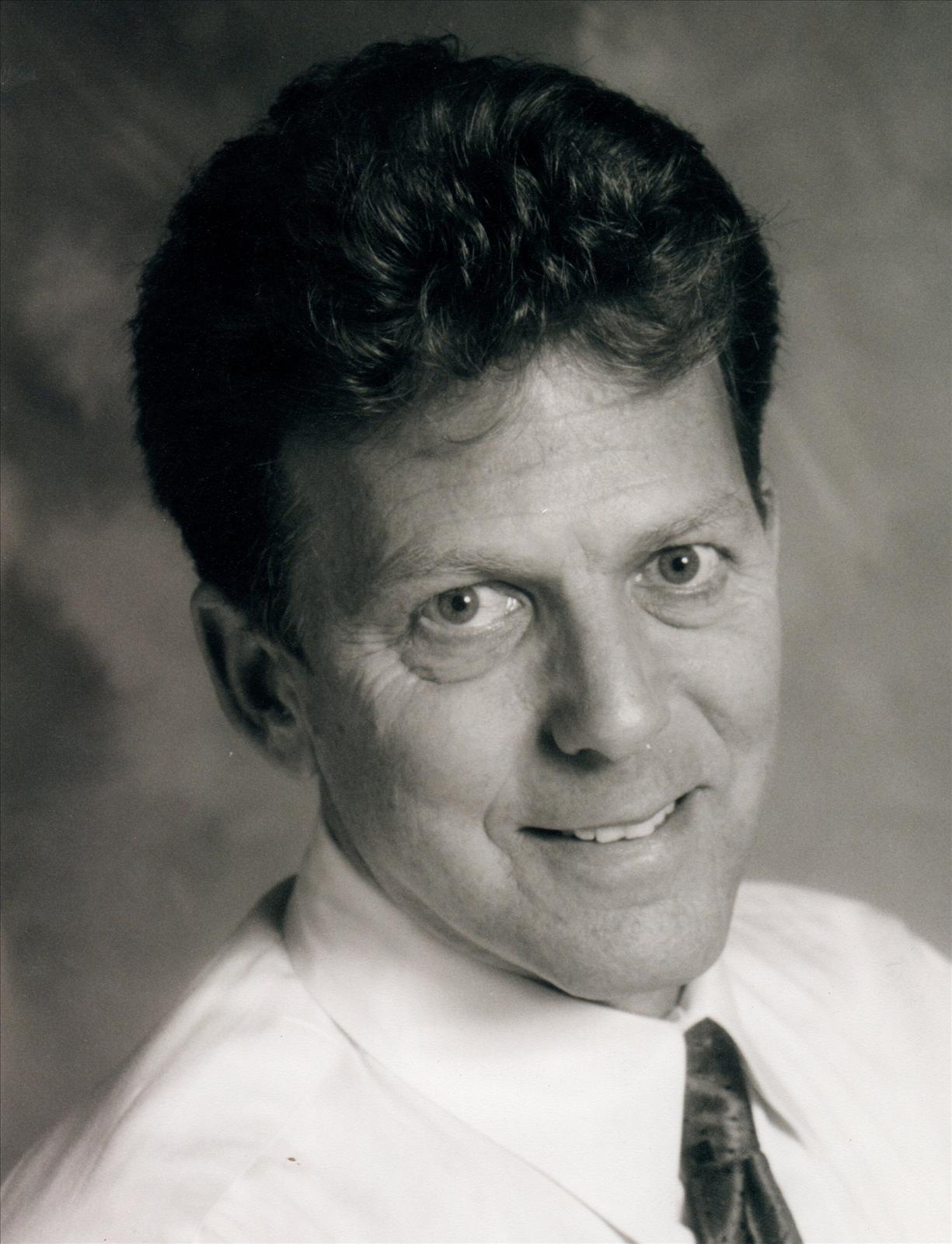
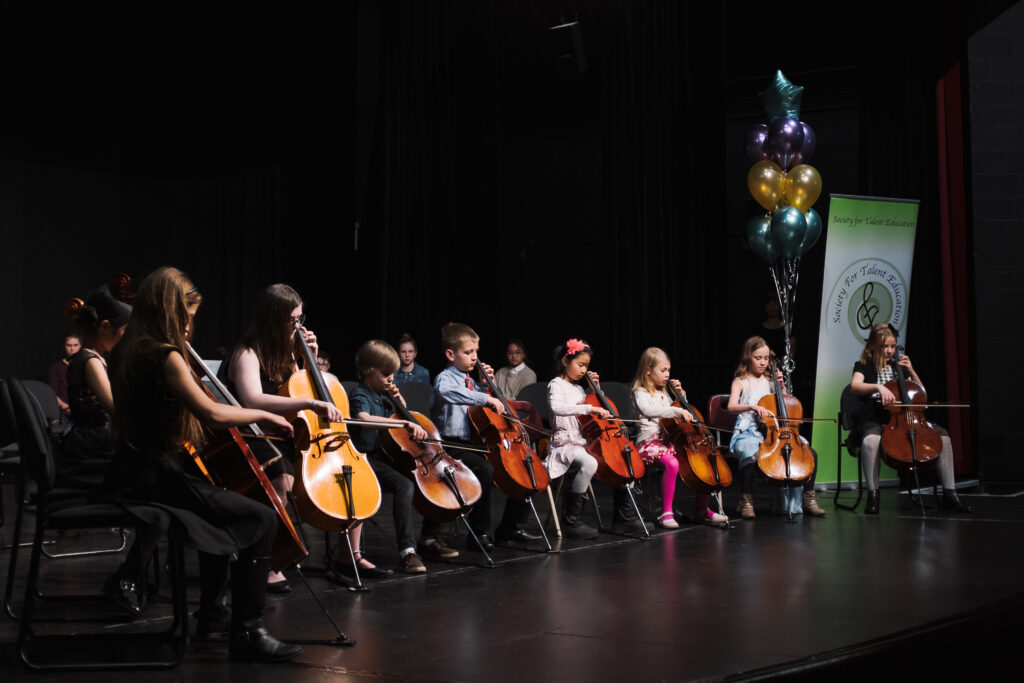
Mark has been playing cello for 56 years, and started when he was 11 years old in a Suzuki strings program in Calgary with Thomas Rolston. He began on piano, but once he discovered the sound of the cello, it took over. When he was 18, he went to Julliard and got his Bachelor of Music under the instruction of Harvey Shapiro. After his time there, he pursued an education at the University of Alberta with Claude Kenneson where he restarted his Suzuki journey. Mark has been teaching at the Society for Talent Education since 1980.
His main teachers were Harvey Shapiro and Claude Kenneson, both of whom had connections to a famous violinist and pedagogue Demetrius Constantine Dounis, a contemporary of Shinichi Suzuki.
“Since my two main teachers all had connections to Dounis is kind of interesting, as my work as a teacher has been to take what both [Shapiro and Kenneson] said and apply it to the Suzuki method. Their philosophy of playing fits naturally into the Suzuki philosophy. I boil down what I think the Suzuki method is to: Train the ear and the body will follow, train the gestures and the music will come alive, one interval at a time. The intervals between each note in a piece of music provide the context that each piece of music is different. Following them is important for how our technique physically follows those interval progressions. Thus we program the gestures with the interval progression.”
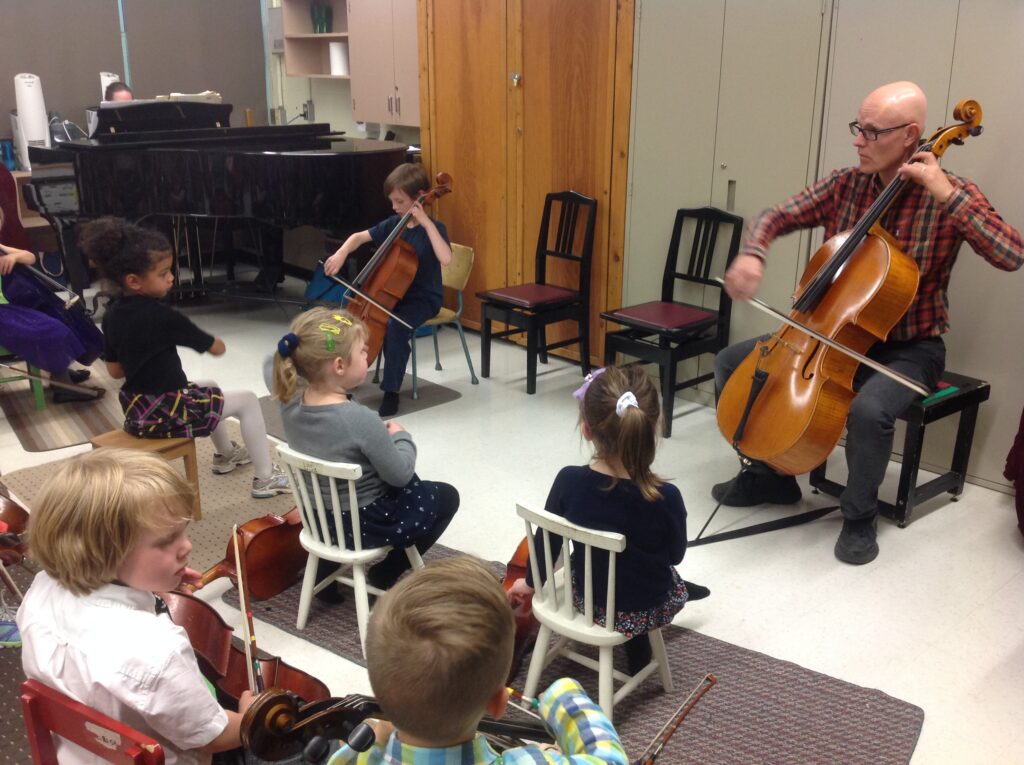
In Mark’s studio, Suzuki Volume 1 – 3 is about “training the ear and the body will follow”, and Volume 4 and above is more about training the exact gestures that the ears guide.
“We want to make sure that what we hear and what we feel, is one. ‘Mother tongue’ is about hearing the music and learning it on the basis of how it sounds, [and] the ear is always what generates the movement.”
On ear training (an exercise):
G Major D Major loop: “The music in Volume 1 is full of scales and arpeggios, so it seems logical for them to understand that process of tonalization. G Major to D Major is about learning harmonic concepts without “teaching” it. They learn to hear it. The home key (G Major) is like being at home, when you move to the dominant (D Major) it’s like you move away, and then come back again (G Major). The process of starting at home, moving away, coming back repeats itself in every piece of music that you’re ever gonna hear – even in 20th Century Music that process is the same.
On Posture:
“I like to think being a musician is like being a small muscle athlete” Mark says that “large muscle athletes (hockey players, goalies) if they stand by the goal post leaning on their stick they won’t be ready” and musicians must be in an “athletic stance” and be “actively ready”
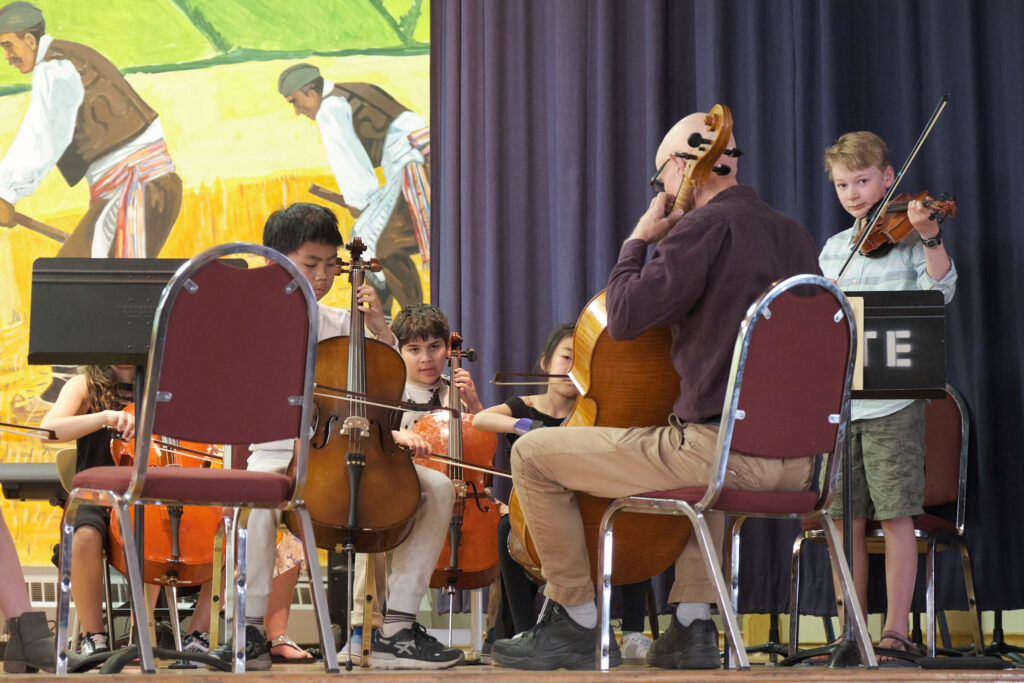
What challenges (if any) did you face in your pedagogical journey?
“In terms of approach, Mr. Shapiro yelled a lot. Old school. Short frustration point. Mr. Kenneson was the complete opposite in his presence as a teacher, he allowed me to be myself, with gentle direction. [Kenneson’s approach] gave me confidence that maybe the yelling didn’t. However, Mr. Shapiro was a great teacher – despite the yelling – and an amazing musician, and I learned just as much from listening to him teach other people as teaching me. I’m very privileged to have studied with Mr. Shapiro.
Mr. Kenneson was very personal and very quiet, and I like to push his name back into the beginnings of our Society here. Kenneson was in the Alberta String Quartet, they all taught at the Society.”
What advice do you have for other pedagogues?
“I’ve been teaching for 36 years. Learning by rote is not playing by ear. Playing by ear is what we do. For any teacher, regardless of experience, it is to make sure that you are doing the ear thing. If you asked me what the fingerings were for “Go Tell Aunt Rhody” I would have no idea, but I hear it, so I do it!”
Another thing is dealing with frustration. “No temper tantrums, no throwing the bow”. Mistakes by the student must be allowed.
What advice do you have for parents?
“The teacher must allow struggle, the parent has to expect struggle, and the student has to allow the struggle. We have to cope with things that are difficult and figure out how to make them easier. If we can do that, we can do anything on the instrument. Anything. The child has to accept the struggle, the parent has to back off and let them figure it out.”
Mark also spoke extensively about gratification. Long-term vs. short term. Internal vs. external. Mark warns parents against “dangling a carrot” for their children to practice. The focus is shifted to the payment for practicing, rather than the joy of practicing itself. Not turning practicing into “work” but nurturing the internal satisfaction of improving at the instrument.
What advice do you have for young players?
Two quotes:
Kató Havas said “The major goal of all string players is an effortless and beautiful tone, for every player that thinks a flying staccato or a faultless glissando are admirable qualities, one pure perfect tone followed by another is the only real height of achievement. That long penetrating sweet tone, the dream and aspiration of all, and the possession of only a very few.”
“Excellence in music is the process that turns the challenge of playing a musical instrument into a choreography of fluid, relaxed, and easy movement, that in-turn leads to honest expression characterized by an attitude of joy and a sense of great privilege.”